
Searching Pope County Civil Dockets
Minnesota Court Records Online, or MCRO, is where a Pope County civil case lookup begins. The state built it for the whole Minnesota Judicial Branch, including Pope County District Court. It is not a county portal. It is also not the eFile and eServe system. A person search takes a last and first name. For a business, use the business name. If the results come back too broad, filter by Pope County, filing date, category, or status before opening a case.
The clearest route is a complete case number. MCRO wants it typed without spaces. Once you have the full number, Document Search works well. Hearing Search fits when you only need a setting. Money judgment questions call for Judgment Search, which is a separate tool. Older, protected, or non-imaged court records still run through Pope County Court Administration. The courthouse terminal is the other route for those.
- Open MCRO Case Search and choose person, business, case number, or attorney search.
- Choose Pope County in the location controls when the search mode offers it.
- Check the case number, caption, filing date, category, and status before selecting a result.
- Open the Register of Actions and read events in date order, including the newest hearing or order.
- Use Court Administration for a plain or certified copy when MCRO does not provide the needed public document.
Note: A public result can hold the whole case history yet leave out some filed images. An empty document link does not mean no paper was filed.
Pope 61-CV Civil Case Clues
Pope County case numbers carry a pattern. Civil examples include 61-CV-26-213, and conciliation matters include 61-CO-26-49. The leading 61 is the Pope County code. Next come letters marking the category, then a two-digit year and a sequence number. Treat these examples as search clues rather than an official codebook. MCRO still wants the complete number entered with no spaces.
The same statewide system shows Pope family FA and probate PR categories. Category matters for access. A family case may show its case-level entry while its documents have narrower public availability. So read a result as a route to the court record, never as a promise that every filing can be viewed online.
| Observed clue | Practical use |
|---|---|
| 61-CV-... | Points to an observed Pope civil category. |
| 61-CO-... | Points to an observed Pope conciliation category. |
| Complete number | Needed for MCRO Document Search and useful for hearing confirmation. |
Inside a Pope County Civil Docket
MCRO names the chronological docket the Register of Actions. Read the header first: case number, category, filing date, court, status, judicial officer when shown, and caption. Then sort out the parties and attorneys. Ordinary civil cases use plaintiff and defendant, while petition-based matters use petitioner and respondent. Those labels mark roles. They are not a ruling.
The dated register usually lists a complaint or petition, service, answer, counterclaim, motions, notices, hearing settings, signed orders, judgment activity, and later satisfaction or appeal entries. Old settings stay in the event history. For the current state of a case, the latest signed order and the newest setting entry beat any earlier calendar date.
| Case header | Number, category, Pope County location, filing date, status, and court information. |
|---|---|
| Parties | Caption, plaintiff or petitioner, defendant or respondent, and attorneys when displayed. |
| Filings | Complaint, petition, answer, counterclaim, service, notices, and attached public documents. |
| Motions and orders | A motion asks for action; a signed order records what the court decided. |
| Settings and result | Hearing history, continuances, judgment, dismissal, settlement, or another disposition. |
Pope Conciliation Court Stays in District Court
Conciliation Court is Minnesota's lower-dollar civil process. Pope County's official court structure names no separate county or justice court for it. Those matters live inside the Pope County District Court record system. The CO category clue often flags them. So a Pope County conciliation search starts with MCRO and Court Administration. Skip any unverified small-claims portal.
No county-specific dollar threshold appears here. If you need the current eligibility limit, ask Court Administration or check current Minnesota court forms and rules. Do not borrow a number from another county. The route itself is simple: try MCRO first. Use the courthouse terminal or Court Administration when remote access is narrower.
Note: Do not count the missing portal against your effort. Pope County simply uses the unified Minnesota district-court record system.
Civil Case Types on the Docket
Pope County District Court handles the major civil disputes, along with civil processes that stay inside the unified district-court system. Do not treat the public record as one uniform catalog. Access varies by case type, date, rule, and order, especially for family, probate, juvenile, and other protected matters.
- Contract, debt, property, injury, and other civil disputes.
- Conciliation matters within District Court.
- Family cases, commonly shown with an observed FA category.
- Probate matters, commonly shown with an observed PR category.
- Public civil judgments and related satisfaction activity.
A public case listing does not make every filing public. The right question is whether a specific record and document fall within the applicable access rules, not whether the broad subject is civil.
Pope Civil Parties and Labels
Reading the parties block prevents a common mistake. The plaintiff starts an ordinary civil action. The defendant responds to that claim. A petitioner asks the court to act in a petition-based matter, and a respondent answers that petition. An attorney of record is the lawyer shown representing a party. These terms mark positions only. They are not proof that a claim was accepted or rejected.
- Caption
- The displayed title identifying the parties or matter.
- Cause of action
- The legal claim asserted, rather than a later docket event.
- Service
- A record that legal papers or notice were delivered through the required process.
- Counterclaim
- A claim raised in response to another civil claim.
Two Pope County cases can carry the same names. Check more than the name line. Party roles, the filing date, the case category, and the location all help confirm you have the right civil docket entry. In MCRO, an exact-name search narrows by date, status, and location. Leave wildcard and Sounds Like off at the same time. Pick one or the other, never both.
Civil Docket Settings and Hearings
A Pope County civil setting can take several forms. The label might read conciliation hearing, default hearing, settlement conference, evidentiary hearing, or jury trial. Each one marks a different stage. A settlement conference is only a meeting aimed at resolution, not a judgment. A default hearing takes up a default issue. The true result still comes from the Register of Actions and the signed order. An evidentiary hearing may receive evidence. It never tells you what the court will decide.
For a case-specific setting, use MCRO Hearing Search or the case register. Then compare it with the current Pope daily calendar. The PDF is posted at 7:00 a.m. on business days and updated hourly. The printed courthouse calendar remains the most current local daily information. For the full county workflow, see Pope County court dates.
Pope Civil Motions Need Orders
A motion is a request for an order. Nothing more. Even one that follows a detailed memorandum or lands before a hearing is not itself a ruling. The Pope County Register of Actions may list a notice of motion, affidavits, exhibits, briefs, and a setting. Read the sequence through to the end: a signed order, judgment, dismissal, or other recorded disposition is what actually states what happened.
Calendar labels deserve the same caution. A default hearing is not a default judgment. A settlement conference is not a settlement judgment. A continuance or reset moves a date, and the earlier date can still sit in the historical register. When a public document image is missing, Court Administration can explain the plain-copy, certified-copy, terminal, or restricted-record route.
Minnesota's copy-request directory lists statewide request resources. Trust the completed civil record, not an isolated event label, for the dependable description of a court result.
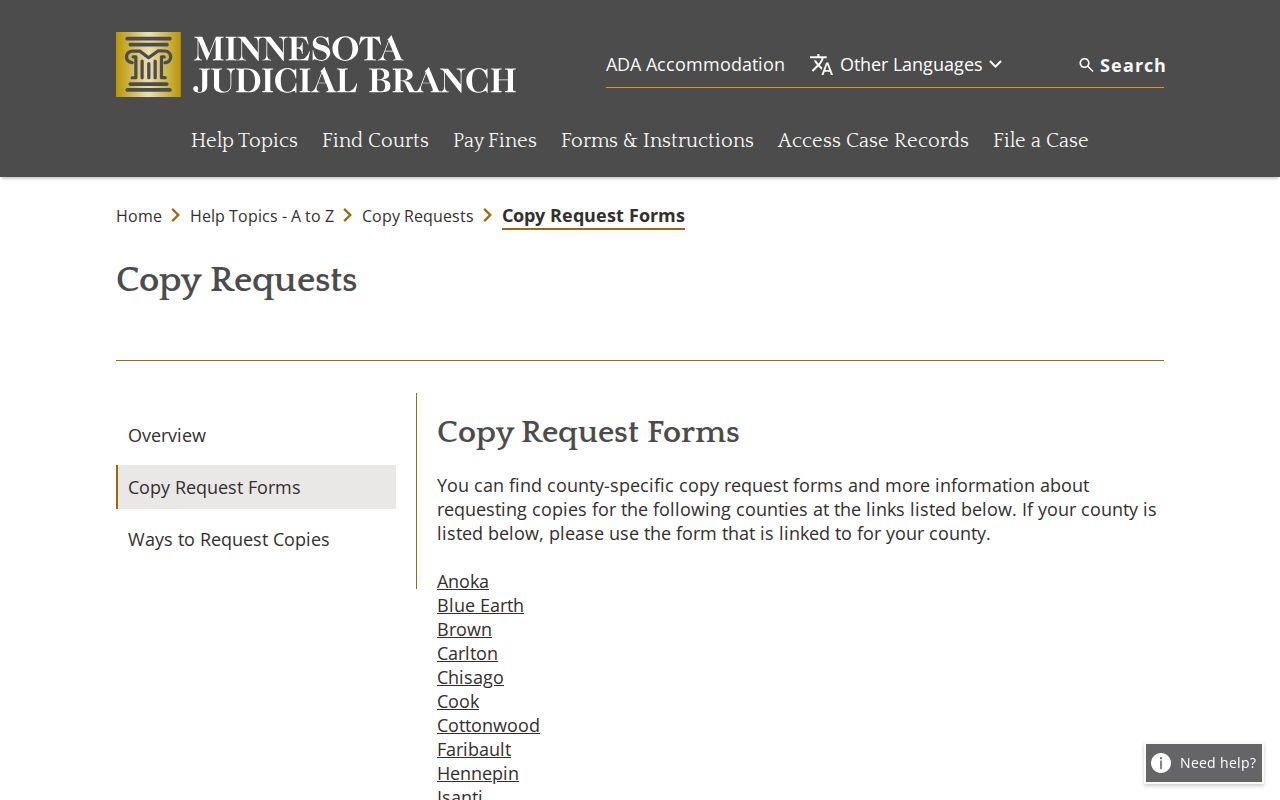
The copy-request channel stands behind every Pope County civil docket. It fills the gap when a public register entry does not include the document a case actually needs.
Civil Docket Access Rules
Start with MCRO. Its free Register of Actions opens public access to a Pope County civil docket. Qualifying remote documents do too. When an ordinary public record is missing, old, or only partly online, the courthouse terminal takes over. Pope County District Court Court Administration does too. Under the court-specific access rules, original court records may be inspected or copied. Remember that MCRO is a reference view, not a certified record service.
Public-access rules:
Minnesota Rule of Public Access 4 makes case records generally accessible subject to exclusions and restrictions.
Minnesota Rule of Public Access 8 addresses inspection, copying, remote access, registers, and record limits.
Minnesota Statutes §13.03 supplies the general government-data framework, while court records follow the more specific court rules.
Some categories stay narrower. Juvenile, adoption, CHIPS, civil-commitment, domestic-abuse, harassment, sealed, and expunged matters can all carry tighter access rules. A missing result may trace to a rule, an order, or a protected category. It may also reflect an online coverage limit. For confidential or sealed material, Court Administration can explain whether the CON101 access-request process applies. Rule 4 is the source for the public-access baseline.
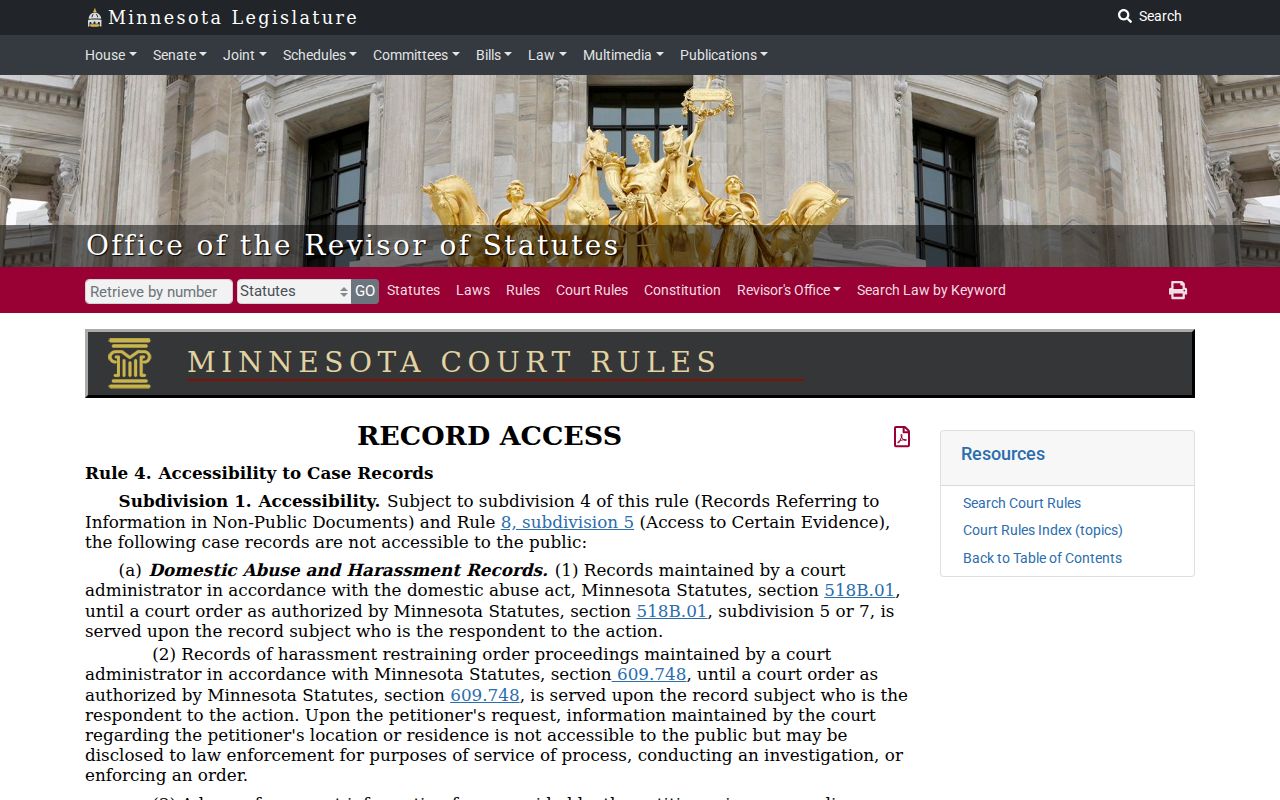
A Pope County civil docket can be open on its face while particular documents or categories stay restricted. The public-access rules draw that line.
Pope Judgment and Satisfaction Records
A judgment is the court's formal civil result. A satisfaction records that the judgment has been paid or otherwise satisfied. Read the result list, the current balance, and any later satisfaction together. Never infer an outcome from case age alone. MCRO Judgment Search fits a debtor-name or business-name judgment question. It is no substitute for the full civil Register of Actions.
Copies carry fees. Pope's current district-court fee page lists the prices. Uncertified copies and printouts come in at $0. Certified copies run $14, exemplified and certified copies $28, and a transcript of judgment $40. A certified judgment search runs $5 per name. Fees can change. Confirm the amount with Court Administration before mailing payment or requesting a specialized copy.
The official copy-request instructions cover in-person, mail, and eFS options. Note that eFS is a filing and service system, not the general public civil-docket search.
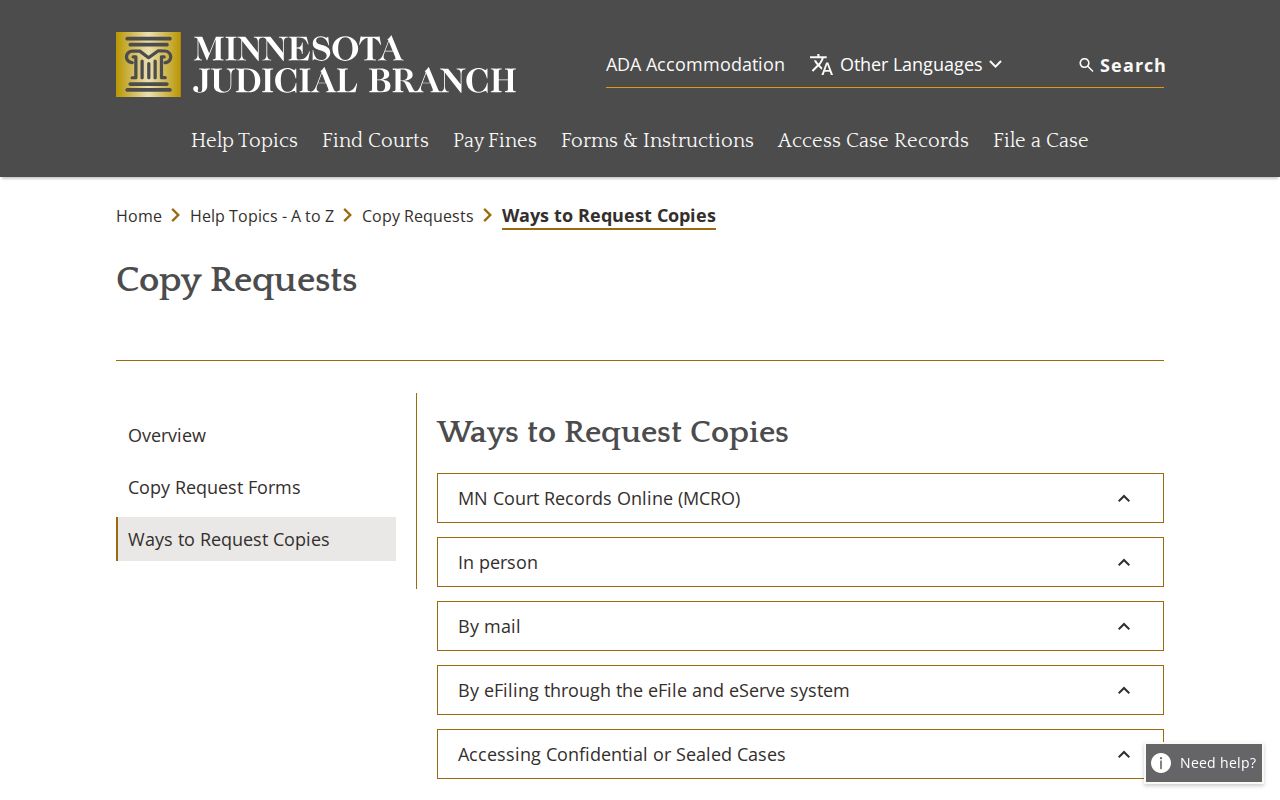
A free Pope County civil docket reference and a copy issued through Court Administration serve different needs. The request-channel source keeps that distinction clear.
Note: A transcript of judgment, a certified copy, and an MCRO download each do different work. Request each by its precise name.